
As soon as, in a small room in a tiny residence, my cousin informed me one thing I by no means forgot. He mentioned, “We belief too simply on this nation. We belief that energy will come again. We belief the ATM will work. We belief politicians who don’t know our names.” I laughed then, however I consider his phrases now as I write a few world that seeks to construct trustless methods.
Within the crypto world, to be trustless is a advantage, it doesn’t imply the absence of belief, however the absence of the necessity for it. It’s the promise that you could depend on code, on algorithms, on methods that don’t lie or overlook, and this can be a unusual factor: that know-how, chilly and impersonal, is one way or the other extra reliable than human beings.
This dialogue between crypto philosophy and conventional human values is greater than technical, it’s a reckoning. A dialog. A redefinition of perception methods. The traditional Greeks debated what it meant to be simply. Right this moment, builders write sensible contracts that implement justice with out emotion, with out partiality. That is the world we’re constructing; a world the place philosophy sits inside traces of code.
Belief and Its Fragmentation
Philosophers have lengthy requested: Who ought to we belief? And on what grounds? Our mother and father, our lecturers, our leaders? However what occurs when these folks fail us? When banks collapse, when governments censor, when establishments betray?
Blockchain emerged as a solution to this failure of belief. Blockchain belief is just not about believing in an individual or an establishment. It’s about believing in arithmetic, in consensus. In distributed ledgers that no single actor can management and it’s about changing the delicate structure of perception with one thing unbreakable.
There’s something each stunning and tragic on this. Lovely, as a result of it means folks can transact, cooperate, and construct with out the worry of being cheated. Tragic, as a result of it admits that belief within the human sense has grown so weak that we want machines to avoid wasting us from one another.
The Ethics of Sensible Contracts
A sensible contract is a promise written in code. “If this, then that.” It doesn’t really feel, neither does it forgive. It can’t be bribed, and but it might probably implement equity in a means no choose ever might; however can a sensible contract be moral?
Ethics requires context, it asks why; it considers mercy. A sensible contract can’t inform if a farmer in Uganda missed a fee due to a drought. It solely is aware of that the deadline handed. On this, the ethics of sensible contracts collide with the softness of humanity. We should ask ourselves: Is ideal equity at all times truthful? Is absolute justice at all times simply?
Crypto idealists will say sure. That guidelines must be guidelines, with out exception, however this, too, is a philosophical stance. One inherited from Enlightenment rationalism. From the assumption that purpose, above all, ought to information human affairs. However I bear in mind my aunties in Enugu who lend cash with a nod and a narrative…who know when to attend and when to demand. There may be knowledge in that, too.
Perception within the Age of Code
Faith, tradition, and group have lengthy formed our conscience. These Web3 perception methods at the moment are rising within the form of DAOs (Decentralized Autonomous Organizations), the place code governs communities. A few of these DAOs have constitutions, mission statements, and values. Others let tokens resolve all the things. In Web3, perception turns into programmable and governance turns into a math drawback. However what are we dropping once we scale back human instinct to a voting algorithm?
And but, I don’t reject it. I’m fascinated; as a result of I see on this a brand new form of storytelling. A brand new myth-making. Communities coming collectively to resolve what’s simply, what is efficacious, what’s true, not by elders or clergymen, however by GitHub proposals. This isn’t the tip of philosophy. It’s its evolution.
The Philosophical Blockchain
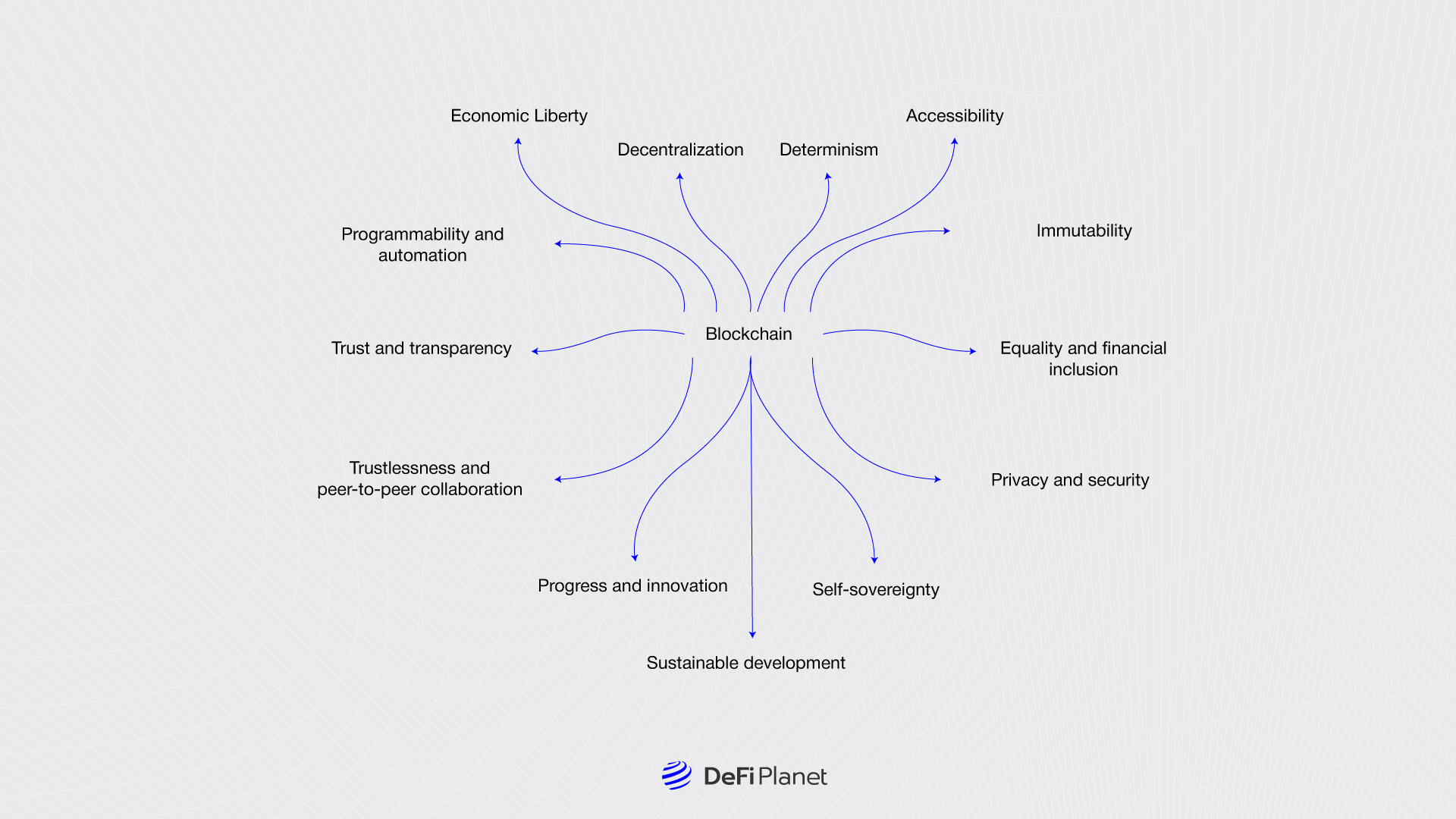
The philosophical blockchain is one the place each block is a query. Each transaction, a declaration of perception. If I ship you Bitcoin, I’m saying: I imagine in a world the place worth is just not managed by banks. If I mint an NFT, I’m saying: I imagine within the possession of digital identification. If I be a part of a DAO, I’m saying: I imagine that group will be borderless. Every of those actions is encoded with that means…with values….with worldview. The blockchain is a ledger, sure, however additionally it is a diary of our collective philosophical evolution.
I think about Socrates, reborn as a Solidity developer, asking his college students not “What’s advantage?” however “What ought to our protocol optimize for?” And maybe Plato would write his Republic not as a dialogue however as a DAO structure.
Between Cynicism and Hope
There may be, in crypto, a deep stress between cynicism and hope. The cynics say: “We can’t belief folks. We should construct methods the place belief is pointless.” The hopeful say: “We will construct higher folks by constructing higher methods.”
Each are true, and the blockchain is born from disappointment. From 2008. From banks that gambled with our futures. From middlemen who took an excessive amount of. However additionally it is born from creativeness. From the dream of an open web…of world finance for the unbanked…of coordination with out coercion. It’s, in a means, a love letter to what humanity could possibly be, if we dared to reimagine belief.
On-Chain Reminiscence and the Ethics of Permanence
Blockchains bear in mind all the things. Each transaction, each message, each mistake; etched into the ledger like digital stone. This on-chain reminiscence is each a technological power and a philosophical riddle. In a world the place knowledge is without end, who decides what deserves everlasting life? Immutability, the blockchain’s proudest characteristic, turns into complicated when weighed in opposition to human fallibility. A typo in a sensible contract, a regrettable NFT, a second of vulnerability made public, these can’t be erased. There’s no “backspace” in a trustless system. And whereas permanence ensures accountability, it additionally denies us one thing deeply human: the best to overlook, to outgrow, to forgive.
We’re constructing methods that mirror our beliefs, however permanence with out compassion dangers turning fact into punishment. In our pursuit of transparency, we should ask: Ought to all truths final without end? Or can we, at occasions, want digital amnesia to honor our capability for change, therapeutic, and redemption?
Ultimate Reflections
We’re not simply constructing software program. We’re constructing a brand new social contract. One the place blockchain belief replaces blind religion. The place crypto philosophy guides governance. The place sensible contracts ethics remind us that equity and justice usually are not at all times the identical. As we create this world, we should write not solely in code however in story. We should keep in mind that behind each token is an individual. That Web3 perception methods are solely as robust because the people who maintain them. And maybe, within the quiet traces between blocks and hashes, we’ll rediscover one thing deeply human: the will to be seen, to be trusted, and to belief in return.
In that, blockchain is just not the tip of belief, however its most radical new starting.
Disclaimer: This text is meant solely for informational functions and shouldn’t be thought of buying and selling or funding recommendation. Nothing herein must be construed as monetary, authorized, or tax recommendation. Buying and selling or investing in cryptocurrencies carries a substantial danger of economic loss. At all times conduct due diligence.
If you wish to learn extra market analyses like this one, go to DeFi Planet and comply with us on Twitter, LinkedIn, Fb, Instagram, and CoinMarketCap Neighborhood.
Take management of your crypto portfolio with MARKETS PRO, DeFi Planet’s suite of analytics instruments.”