Key Takeaways:
The U.S. Federal Housing Finance Company (FHFA) will consider how cryptocurrency holdings could affect mortgage eligibility.FHFA Director Invoice Pulte, a identified crypto advocate, is spearheading the research as digital belongings achieve mainstream acceptance.This marks a significant step in integrating crypto into conventional monetary programs, with potential implications for Bitcoin, Solana, and broader DeFi adoption.
In a shocking shift that would reshape how People finance their properties, the U.S. housing regulator has introduced plans to discover the function of crypto belongings in mortgage qualification. This coverage evaluation, initiated by newly appointed FHFA Director Invoice Pulte, alerts rising momentum for Bitcoin and different digital belongings to achieve institutional legitimacy in the actual property sector.

A Turning Level—Crypto’s Entry into the U.S. Housing Market?
On June 24, Invoice Pulte—Director of the Federal Housing Finance Company (FHFA)—posted on X (previously Twitter):
“We’ll research the utilization of cryptocurrency holdings because it pertains to qualifying for mortgages.”
This quick however impactful submit instantly started circulating across the crypto and actual property communities. Data is scant however the implications are huge. If crypto holdings can finally be counted as a part of a person’s monetary profile when making use of for house loans, it may open mortgage entry to thousands and thousands of U.S. crypto holders beforehand thought-about “underbanked” by conventional requirements.
The FHFA regulates Fannie Mae and Freddie Mac — the 2 greatest mortgage firms in the USA — so any adjustments must ripple out and apply nationwide. The company’s research is anticipated to evaluate elements corresponding to volatility, proof of funds, custody mechanisms, and potential fraud dangers associated to crypto holdings.
Learn Extra: Coinbase’s New Bitcoin Advert: The Paradox of Dwelling Costs in Bitcoin vs. {Dollars}
Who Is Invoice Pulte—and Why Does This Matter?
Invoice Pulte is just not your typical bureaucrat. The grandson of Pulte Properties founder William Pulte, he’s an entrepreneur, investor, and outspoken crypto supporter. Previous to his March 2025 appointment by former President Donald Trump, he ran Pulte Capital Companions and made waves on-line for distributing Bitcoin giveaways on X in 2019.
His monetary disclosure filed earlier this yr revealed:
Between $500,001–$1,000,000 in BitcoinThe identical quantity in SolanaFairness in MARA (Marathon Digital Holdings), one of many largest Bitcoin miners
Pulte’s open assist of digital belongings units him other than most federal officers and makes his transfer to check crypto’s function in mortgage {qualifications} each daring and genuine. He has additionally backed “meme shares” like GameStop and invested in ventures tied to YouTube influencer MrBeast—indicating a robust affinity for decentralized and community-driven finance.

Why This Research Might Reshape Lending Requirements
If crypto could be formally acknowledged as a qualifying asset in mortgage purposes, it might problem many years of conventional lending standards, which closely depend on:
Financial institution statementsEmployment historical pastTax paperworkConventional funding portfolios
Crypto, against this, is decentralized, self-custodied (in lots of circumstances), and intensely unstable. Lenders have thus far been reluctant to just accept crypto balances due to:
Speedy worth swingsRegulatory uncertaintyLack of standardized custody reporting
However as main monetary establishments heat as much as crypto—with BlackRock, Constancy, and Franklin Templeton all launching spot Bitcoin ETFs—lenders could comply with swimsuit.
The FHFA’s exploration may additionally encourage clearer tips round crypto asset verification, proof of reserves, and integrations with centralized exchanges like Coinbase or Binance.US to confirm borrower balances.
Institutional Momentum—And The place the Market Is Headed
This information comes on the heels of a number of alerts that crypto is shifting deeper into the mainstream monetary system:
Technique (previously MicroStrategy) lately added one other 245 BTC, price roughly $24.8 million, bringing its holdings to 592,345 BTC, valued close to $60 billion.DeFi Growth Corp, a publicly traded entity — is accumulating +620k SOL ($~90M) and is now the most important Solana treasury amongst public firms.Crypto ETFs are courting document inflows, with bitcoin ETFs taking in additional than $15 billion in belongings beneath administration in lower than six months for the reason that SEC approval.
Learn Extra: SEC Critiques 72 Crypto ETF Purposes in Push Towards Broader Market Integration
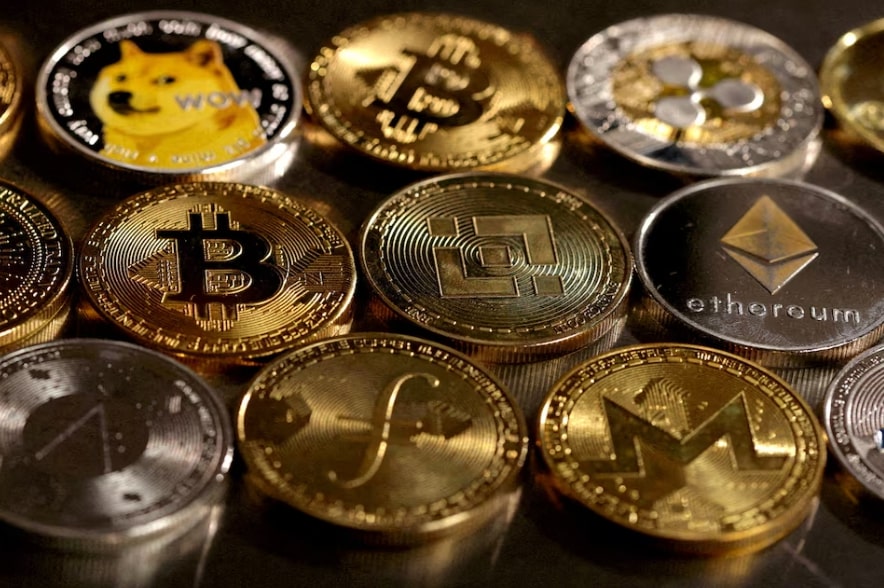
These developments point out rising institutional confidence in crypto belongings as store-of-value funding autos and strategic reserves — and so they may assist make them extra palatable to mortgage underwriters and regulators.
What Comes Subsequent—And What Debtors Ought to Count on
At this level, Pulte’s announcement is extra of an inquiry than a coverage. No rulebook has been written, and there’s no suggestion but of how crypto holdings is perhaps factored, or audited, into underwriting choices.
Nonetheless, a number of potential instructions are being mentioned:
Third-party custodianship: Cryptos held on massive custodial exchanges is perhaps simpler to audit than if saved by the proprietor themselves.Mortgage-to-value (LTV) changes: Lenders can supply low cost charges for that volatility on crypto holdings.Good contract-based reporting: Earnings or reserve statements may a while into the long run be automated by way of a blockchain to achieve qualification.
Because the FHFA continues to look at how this works, it would in all probability accomplice with banks, fintechs and possibly even blockchain monitoring firms like Chainalysis or TRM Labs to judge fraud danger, transparency and adoption requirements.
Within the meantime, house owners of crypto who’re anticipating house loans ought to collect paperwork that demonstrates their long-standing holding and possession of wallets, together with their transaction histories.