
Key Takeaways:
The GENIUS Act, a key U.S. stablecoin invoice, has formally reached the Home after robust Senate approval.Home management indicators doable delay as lawmakers search to merge it with the broader CLARITY Act.Donald Trump urges a clear passage of the GENIUS Act, placing strain on the Home to keep away from amendments.
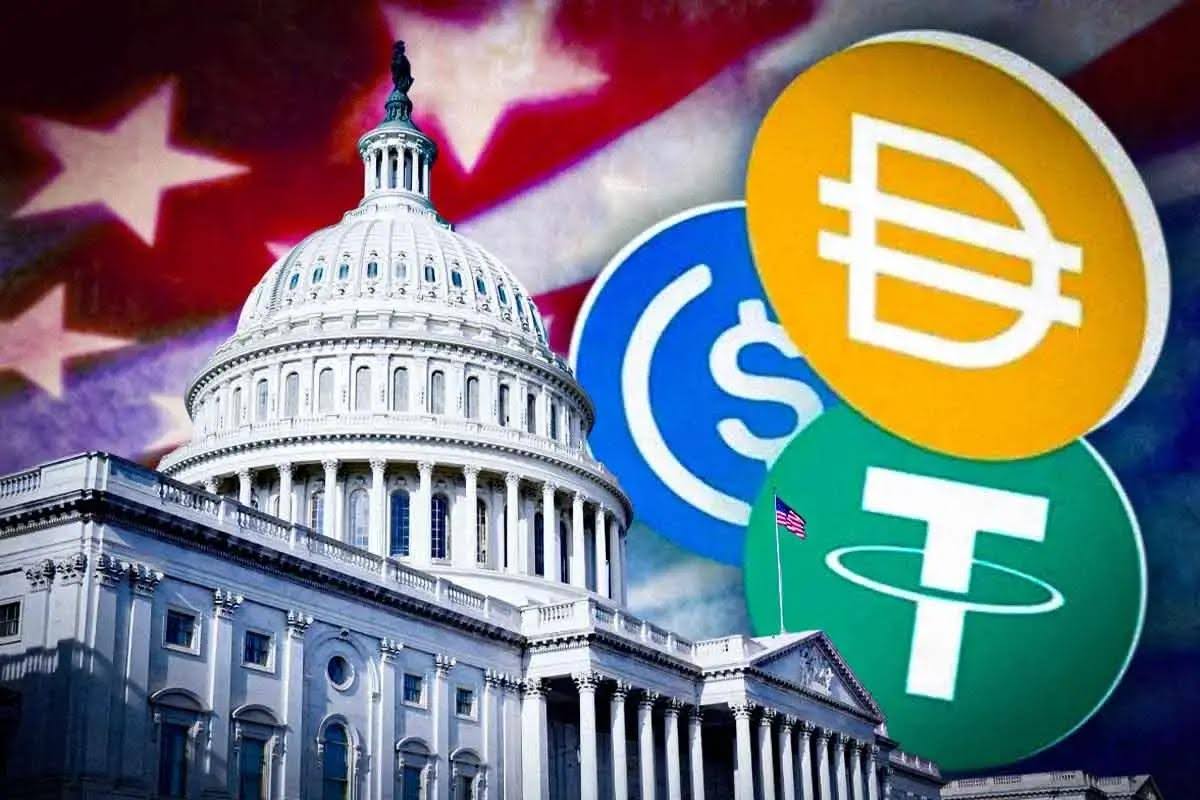
After clearing the Senate with overwhelming bipartisan help, the GENIUS Act — a landmark invoice aimed toward regulating stablecoins — has entered the Home. However momentum might stall as prime Republicans name for a merger with the CLARITY Act, a extra complete crypto market construction proposal.
Learn Extra: GENIUS Act 2025 – All You Have to Know About This New Stablecoin Regulation
From Senate Approval to Home Reception
Swift Motion, However an Unsure Path Ahead
The GENIUS Act was authorized 68-30 in america Senate on June 17, 2025, exhibiting cross-party settlement on the significance of regulation of stablecoins. The draft, which has been largely thought of as a legislative blueprint for digital asset coverage, now progresses to the Home of Representatives.
Timeline of Legislative Actions:
June 17, 2025 (Senate): The GENIUS Act handed with amendments, vote No. 318.June 23, 2025, 3:19 PM (Home): The Home obtained the invoice in open session.June 23, 2025, 3:29 PM (Home): The invoice was “held on the desk,” which is management’s means of claiming it has not been referred to committee or ground debate.June 23, 2025 (Senate): A message on Senate motion despatched to the Home.
This course of signifies administrative effectivity — solely 10 minutes separated the invoice’s receipt and its pause — but in addition displays an inner maintain whereas Home management considers its subsequent transfer.
Learn Extra: U.S. Senate Passes the GENIUS Act — What’s Actually Contained in the $3.7 Trillion Crypto Invoice?

Home Push to Merge GENIUS with CLARITY Act
Merger Tensions Might Derail Quick Progress
In line with journalist Eleanor Terrett on X, some lawmakers — led by GOP Majority Whip Tom Emmer — are advocating for a merger between the GENIUS Act and the CLARITY Act, a broader crypto market construction invoice. The CLARITY Act, whereas not but handed, outlines a authorized framework for classifying crypto property and assigning regulatory authority between the SEC and CFTC.
Emmer’s assertion:
“Market construction is crucial to any Congressional motion on digital property. I anticipate the GENIUS Act has a path within the HOUSE, as long as it’s accompanied by the CLARITY Act.”
Merging the 2 might delay the GENIUS Act considerably, as it could require the Senate to approve a modified model — triggering a legislative ping-pong that would stretch into This fall 2025 or past.
Trump Requires Instant Passage
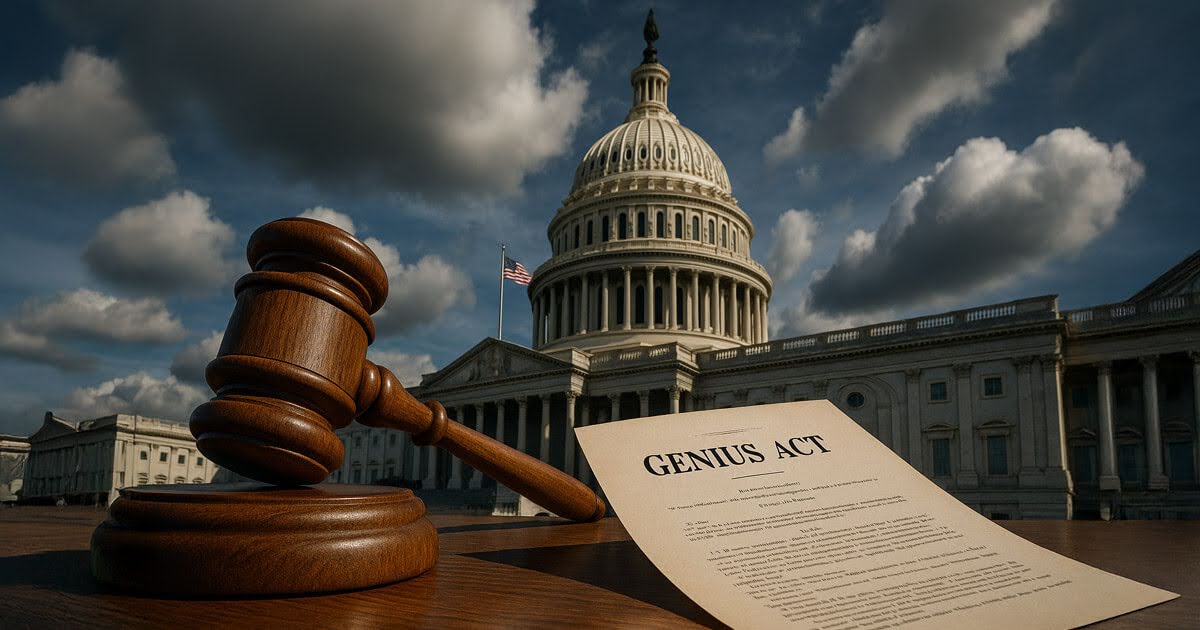
Former President Donald Trump has weighed in, calling for the GENIUS Act to be handed with out modifications. His group launched a press release urging the Home to keep away from amendments, emphasizing the urgency of implementing a stablecoin framework to spice up U.S. competitiveness in digital finance.
This political strain from Trump provides a layer of urgency, particularly as each events place themselves on crypto coverage forward of the 2026 midterm cycle. The message is evident: Get the invoice to the President “ASAP.”
The CLARITY Act: Broader Crypto Guidelines in Ready
The CLARITY Act, sometimes called the crypto business’s long-awaited regulatory spine, seeks to outline digital property as both commodities or securities — ending years of regulatory ambiguity. Whereas the Home model has cleared preliminary markups, its path to ultimate passage remains to be murky.
Lately, the Senate Banking Subcommittee on Digital Property revealed a separate set of ideas for its personal model of CLARITY, suggesting additional divergence between chambers.
Ought to GENIUS be tied to CLARITY, the 2 payments could possibly be held up in prolonged negotiations, so it’s not as possible that stablecoin guidelines can be enacted in 2025.
Crypto Market Reacts to Potential Delay
Market observers are paying eager consideration to how this political gridlock may have an effect on U.S. stablecoin suppliers resembling Circle (USDC), Paxos, and Tether (USDT). And whereas these companies perform beneath state-issued tips now, a federal commonplace would supply some long-term certainty.
Trade analysts warn:
A delay in stablecoin regulation might weaken U.S. competitiveness in opposition to jurisdictions just like the EU, the place MiCA guidelines are already being applied.Unregulated progress of offshore stablecoins could proceed to sidestep U.S. shopper safety targets.
What’s Subsequent?
As of now, the GENIUS Act sits “held on the desk” within the Home. The approaching days will reveal whether or not Home management prioritizes a clear vote — or gambles on a broader crypto overhaul.
With Senate approval already secured and presidential strain mounting, the Home stands at a crossroads: act rapidly and ship GENIUS to the White Home — or hyperlink it to a wider crypto battle that would value vital momentum.