
Be a part of Our Telegram channel to remain updated on breaking information protection
Japan’s monetary regulator is planning laws to require crypto exchanges to keep up legal responsibility reserves to guard clients in opposition to hacks or safety breaches.
A report by The Nikkei mentioned the Monetary Providers Company (FSA) plans to submit laws to parliament in 2026.
The laws would require crypto exchanges to fulfill necessities just like these for securities corporations, which at present maintain reserves starting from $12.7 million to $225 million, relying on buying and selling quantity.
Till now, crypto exchanges have been capable of work round reserve necessities by storing a portion of buyer belongings in chilly storage, that are wallets that aren’t linked to the web.
The brand new framework will create formal procedures for returning belongings to shoppers within the occasion a crypto alternate enters chapter. It should embrace permitting court-appointed directors to deal with buyer repayments.
To ease the monetary burden, the FSA is contemplating permitting alternate platforms to buy insurance coverage somewhat than holding full money reserves.
Japan Has Been Rocked By A Sequence Of Crypto Hacks
The deliberate mandate follows a collection of safety breaches that focused Japanese crypto exchanges.
Maybe essentially the most notable hack, which Japan remains to be recovering from, is the collapse of now-defunct platform Mt. Gox. Hackers had drained 850,000 BTC from the platform in 2014, which had pushed the alternate into chapter 11. Some repayments solely began a decade later, with repayments now working by October 2026.
BREAKING: Mt. Gox has delayed BTC repayments to the following yr.
Much less promoting stress in the marketplace.
That is very bullish. pic.twitter.com/3vWJrgFIEy
— Ash Crypto (@AshCrypto) October 27, 2025
Initially of 2018, Coincheck suffered one the most important crypto alternate hacks on the time after roughly $530 million price of NEM tokens have been stolen. Shortly after the incident, the FSA raided Coincheck’s Tokyo Workplace.
In September that very same yr, the platform Zaif was hacked for round $62 million. Japan’s FSA went on to subject a enterprise enchancment order, citing inadequate rationalization of how the hack occurred. The regulator additionally highlighted the platform’s shortcomings in danger administration.
Extra not too long ago, DMM Bitcoin misplaced 4,502 BTC valued at roughly $305 million in Could final yr. With this incident, North Korean hackers had compromised an worker at Ginco, which was the pockets software program supplier DMM had contracted for transaction administration.
Simply final month, an estimated $21 million in Bitcoin and different cryptos was stolen from addresses linked to SBI Crypto, a mining pool owned by SBI Group. Blockchain investigations had recognized laundering exercise by way of the transaction mixer Twister Money in addition to potential North Korean connections.
Earlier this month, Japan’s FSA began weighing a rule that may require any agency that gives crypto-management methods, such because the software program that was utilized by DMM Bitcoin previous to its breach, to file prior discover with regulators.
Asia Ranked Second In Bitcoin Thefts, Japan Has One Of Highest Sufferer Counts
On-chain analytics agency Chainalysis mentioned in a mid-year report that Asia ranked second for Bitcoin thefts and had a record-breaking variety of digital heists.
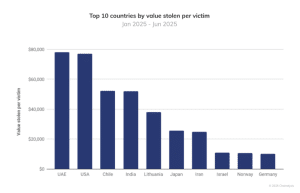
Prime 10 nations by worth stolen per sufferer (Supply: Chainalysis)
It mentioned that Japan, Indonesia, and South Korea rank among the many high nations for sufferer counts, whereas Asia ranks third by way of Ethereum losses.
Associated Articles:
Greatest Pockets – Diversify Your Crypto Portfolio

Simple to Use, Characteristic-Pushed Crypto Pockets
Get Early Entry to Upcoming Token ICOs
Multi-Chain, Multi-Pockets, Non-Custodial
Now On App Retailer, Google Play
Stake To Earn Native Token $BEST
250,000+ Month-to-month Lively Customers
Be a part of Our Telegram channel to remain updated on breaking information protection