
To mark 100 years for the reason that loss of life of painter John Singer Sargent, English Heritage has placed on a present of 18 portraits of American heiresses that locations their lives and notable achievements on the forefront of the story.
Referred to as the “greenback princesses”, the ladies had been a part of the transatlantic marriage phenomenon of the late nineteenth century. They travelled to the UK to marry into the British aristocracy, bringing wealth with them. The money injection from one such marriage helped restore Blenheim Palace in Oxfordshire.
Lots of the greenback princesses went on to make vital contributions to British society, together with Nancy Astor, who grew to become the primary sitting feminine Member of Parliament (MP) within the Home of Commons. She held her seat of Plymouth Sutton for 25 years.
John Singer Sargent’s portrait of Nancy Astor, who grew to become the primary sitting feminine Member of Parliament (MP) within the British Home of Commons © Nationwide Portrait Gallery, London
One other of the sitters was Dame Jessie Wilton Phipps who additionally had a profession in politics, being elected to London County Council in 1907 and later chairing the Central Council for the London Blind.
An instance of the usually loveless marriages of the greenback princesses was that of Consuelo Vanderbilt, whose charcoal portrait has by no means been on public show till now. She was against her marriage to the Duke of Marlborough and wept behind her veil on her marriage ceremony day. After the marriage the duke knowledgeable her he had solely agreed to the wedding to save lots of his ancestral house of Blenheim Palace.
Regardless of her sad marriage, the brand new duchess was revered by the poorer tenants on her husband’s property and her progressive politics had been mirrored in her advocacy for social reforms and backing the Liberal Social gathering’s welfare insurance policies together with free faculty meals, free medical checks for kids and pensions for the aged. She was additionally a supporter of ladies’s suffrage.

John SInger Sargent’s portrait of Consuelo-Vanderbilt (round 1905) who backed welfare reforms similar to free faculty meals and was additionally a supporter of ladies’s suffrage
Photograph: English Heritage
The exhibition, titled Heiress: Sargent’s American Portraits, is the primary time the portraits have all been introduced collectively in a single place. Wendy Monkhouse, the curator, tells The Artwork Newspaper: “It’s straightforward to easily view the [dollar princesses] as merely sitters to Sargent however right here, we take into account them as people, and their lives are described within the context of broader themes in girls’s historical past.”
She added that the exhibition does not shrink back from the extra troubling points of the portraits. She says: “We’ve tackled tough and uncomfortable points like misogyny, stereotyping and xenophobia head on, which all performed a major position in setting up the picture of the American heiress of their lifetimes, and nonetheless do at present. Sargent’s depiction of the ladies displays the world of energy and privilege they got here from, however he additionally conveys their character, vitality and vitality.’’
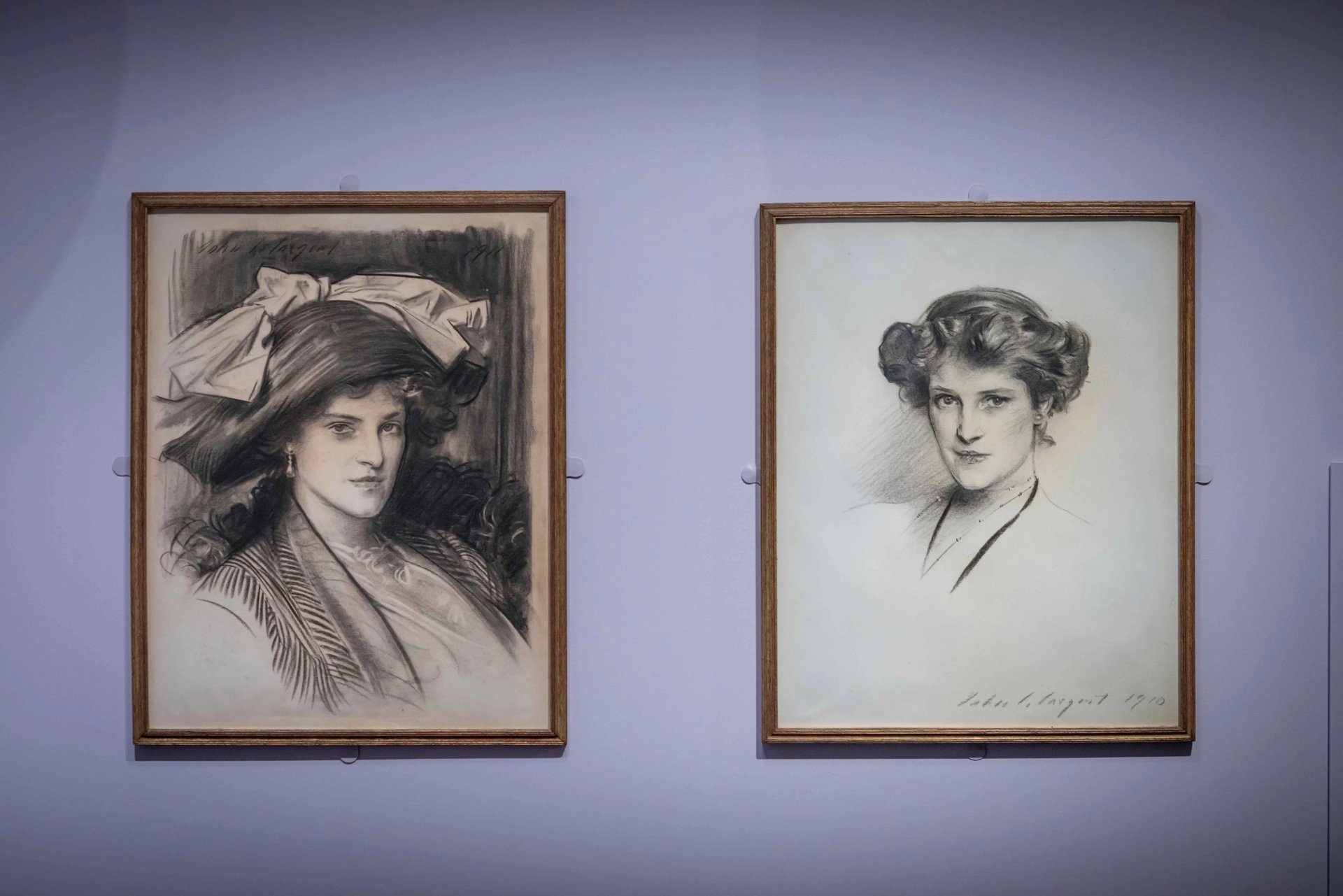
John Singer Sargent’s portraits of Woman Anne Innes-Ker with and with out hat– (1910 and 1911)
Photograph: English Heritage
Sargent, an ex-pat American who lived and travelled throughout Europe, was essentially the most sought-after portraitist of the Gilded Age. A Sargent fee was the proper accompaniment for these new Anglo-American marriages, demonstrating the standing, wealth and energy that got here with combining American new cash and British the Aristocracy.
The portraits, a mix of oil and charcoal sketches, are on show at Kenwood in Hampstead, London till 5 October. Jenny Abramsky, the chair of the Buddies of Kenwood, mentioned in an announcement: “Artwork is on the coronary heart of what we do, and with the ability to deliver such excellent artwork to Kenwood in Sargent’s centenary 12 months reinforces our confidence in the way forward for Kenwood as a uniquely priceless asset for English Heritage and the broader neighborhood.”