
A historical past of New York Metropolis with Manhattan at its centre overlooks the variety of individuals and locations that contributed to its development right into a metropolis. Standing for 3 centuries within the marshland of southeast Brooklyn, the Hendrick I. Lott Home is without doubt one of the metropolis’s oldest surviving buildings. A Dutch Colonial farmhouse, in-built 1720 because the homestead of Johannes Lott, was integrated into a bigger construction by Hendrick I. Lott in 1800, which in flip was tailored and altered over time as direct descendants of the Lott household lived in the home till 1989.
“It touches on a time that we don’t essentially consider as regards to New York Metropolis, which is a rural and agricultural historical past,” Alyssa Loorya, the president of Pals of the Lott Home and principal investigator of Chrysalis Archaeology, tells The Artwork Newspaper. “The town is greater than simply downtown Brooklyn and Manhattan. I at all times say that New York Metropolis couldn’t actually operate with out the outer boroughs, as a result of the individuals within the outer boroughs function and run the town, and that was true within the 1600s as effectively.”
New York Metropolis bought the home in 2002, and renovations to its exterior and panorama had been completed in 2013, but its inside has not been open to the general public. Now, plans are underway to make it the primary museum in its Marine Park neighbourhood.
The Lott Home in 1922 Photograph: Courtesy Pals of the Lott Home
“It’s not simply the story of the Lott household; it’s the tales of all of the individuals who crossed by means of the property, labored on the property, lived on the property and in addition within the surrounding space,” Loorya says. “It’s a bigger neighborhood that we wish to carry. I’ve had individuals say, ‘What’s so particular in regards to the Lotts? What did they do?’ They had been farmers, they usually had been a part of a neighborhood. They went from being the most important slave-owning household within the space to, generations later, a cease on the Underground Railroad—as a result of political and cultural opinions and views change.”
When the Lotts arrived from Holland in 1652, farming within the small settlements of Brooklyn was supporting the expansion of the Dutch colony of New Amsterdam. The land the household acquired in 1719 in what was then the city of Flatlands turned a part of this agricultural system. At its largest, the Lott farm included greater than 200 acres, with enslaved individuals cultivating crops that had been shipped to the Manhattan markets by way of a close-by inlet to the Atlantic Ocean. (It could be many a long time earlier than paved roads and public transit related this nook of Brooklyn to the city centres.) Slavery was abolished in New York State in 1827, though the Lotts had already freed the enslaved individuals on their property in 1805. Later, newly arrived immigrants from Eire, Italy and Germany in addition to native labourers labored the land, whereas cows grazed on the shoreline’s salt hay.
Even within the Twenties, as skyscrapers had been rising in Manhattan, the Lott Home had a farm, with archival pictures from these remaining years of its agricultural manufacturing exhibiting its peaked gambrel roof presiding over fields of crops. At present, it’s nonetheless in its authentic orientation, and its neighbourhood of Marine Park stays off the crushed path for a lot of New Yorkers—one should take a practice and bus experience to achieve it. Standing out amidst the Twentieth-century blocks of single-family properties, the Lott Home has the potential to be a cultural hub in part of the borough that lacks main establishments.
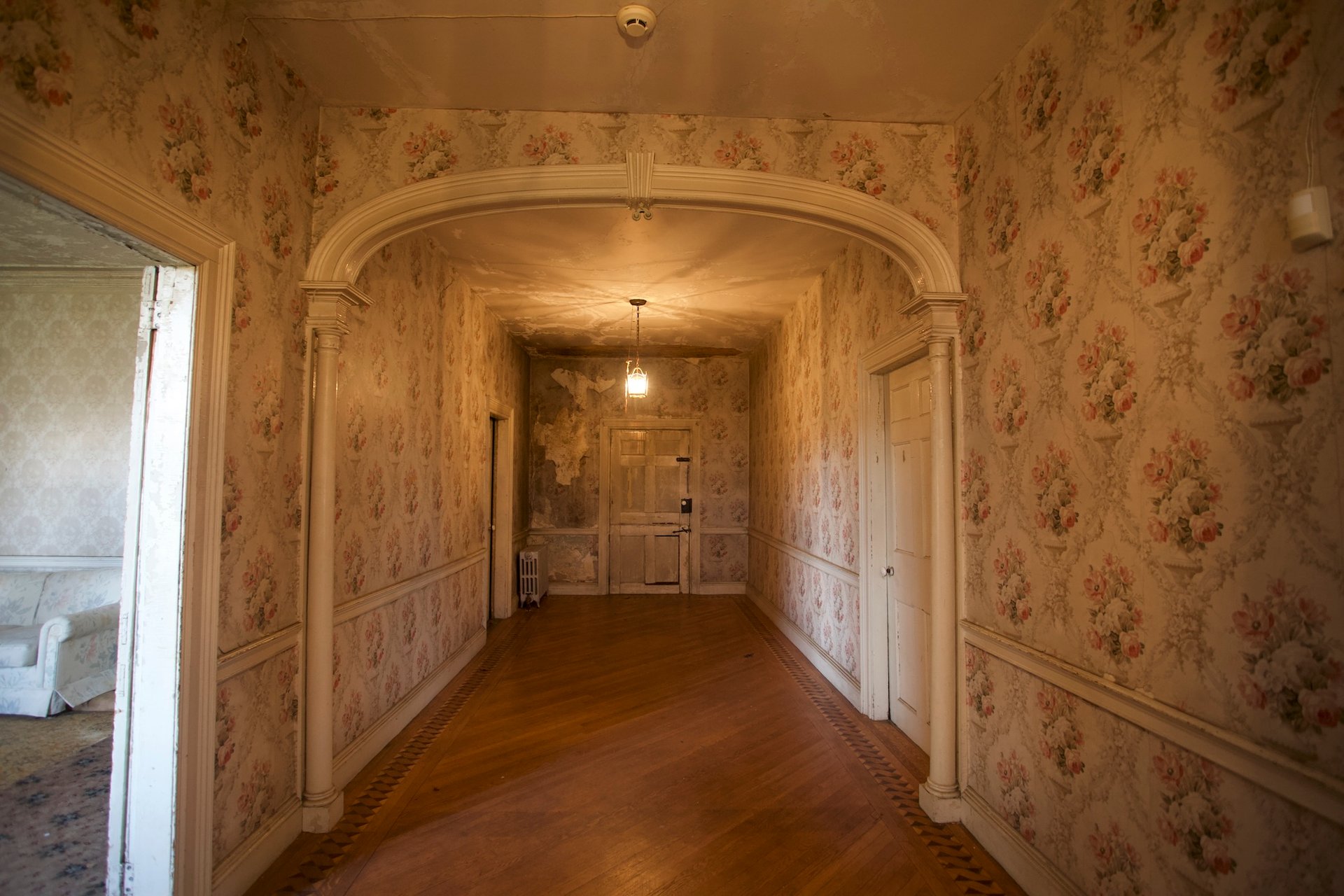
The Lott Home’s distinctive wallpaper will likely be preserved Photograph: Courtesy Pals of the Lott Home
The home is now owned by the New York Metropolis Division of Parks & Recreation and is a member of the Historic Home Belief (HHT) as one in all its 23 companion historic websites on parkland. “As a result of these homes are held within the public belief, and since they’re on public parkland, they’re imagined to be low-cost and neighborhood areas,” says Giulietta Fiore, the director of HHT. “They’ve a singular mandate to stay open and accessible for the neighborhood to come back in and expertise them.”
Pals of the Lott Home, a volunteer organisation began within the early Nineteen Nineties (when the home had fallen into disrepair), is collaborating with NYC Parks and HHT on the present venture. The inside and structural preservation and renovation, from electrical and plumbing updates to air con and accessibility enhancements, is deliberate to begin in early 2026 and anticipated to be a long-term venture. Whereas the work is going on, the Lott Home’s digital and out of doors occasions are ongoing, and small hardhat excursions (the following one will happen on 22 June) are bringing guests inside to find out about the home and its restoration as a museum.
In contrast to most different kinds of museums, historic homes are sometimes trying tons of of years forward. “The reveals can change and the which means of the home can change,” Fiore says, “however our position because the Historic Home Belief is to make sure that the constructing itself stays there, in order that it may be used sooner or later for the methods the neighborhood wants it for use.”
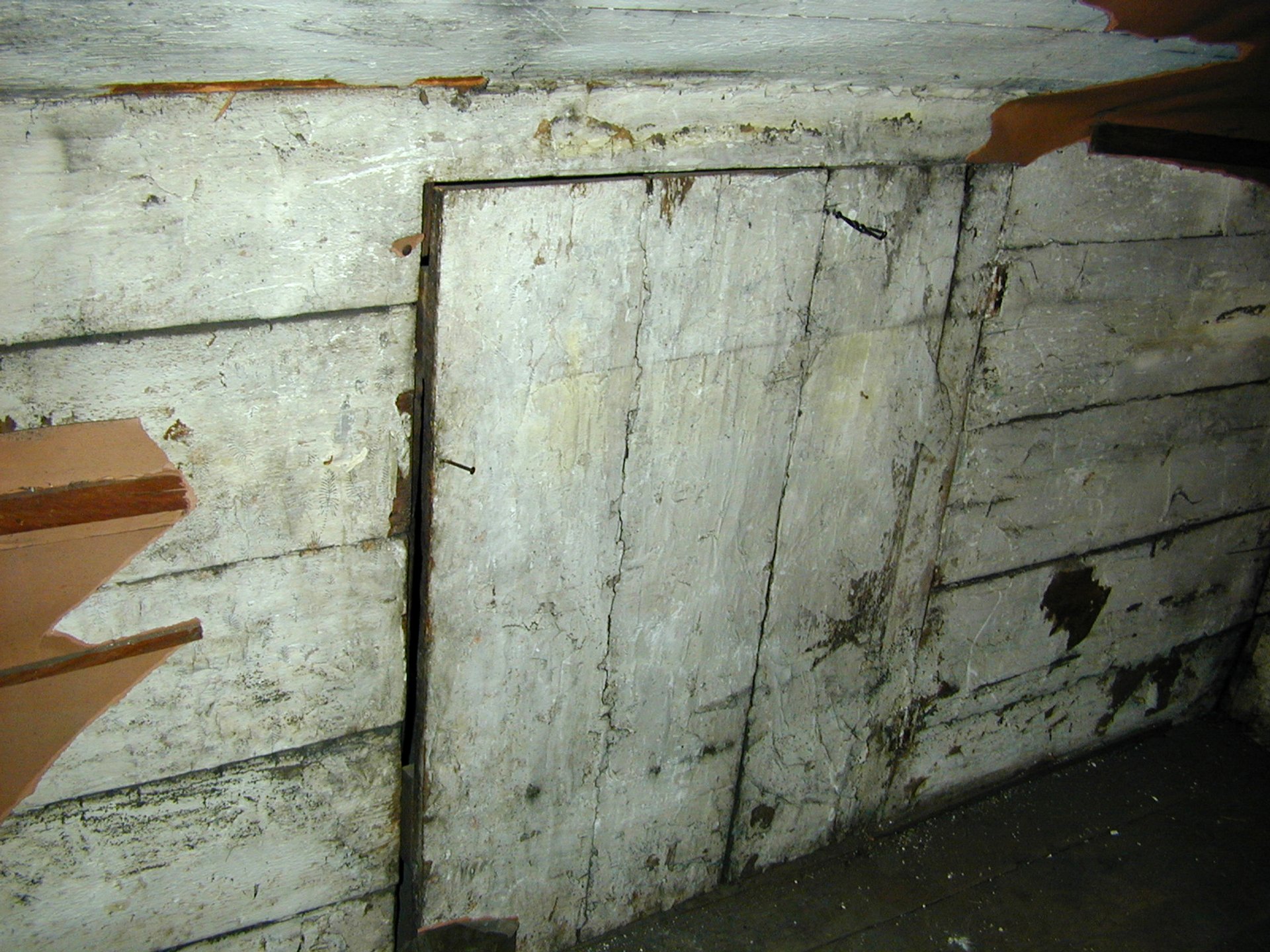
A secret hiding place on the Lott Home for individuals fleeing slavery as a part of the Underground Railroad Photograph: Courtesy Pals of the Lott Home
Alongside modernising the home’s services, you will need to look after the historical past embedded in its structure—from the candle drippings on the floorboards (courting again to the times earlier than electrical energy) and pale early Twentieth-century floral wallpaper to a secret closet believed to be a hiding place on the Underground Railroad.
“The venture can have a light-weight contact, so we’re not erasing the centuries of dwelling which have occurred in that home,” says Julie Fisher, the design director of structure at NYC Parks. “As we’re ending up the design section, the targets are preserving the home and making it secure for guests and workers, and bringing in some Twenty first-century expertise to guard it.”
The Lott Home’s future interpretative programmes and exhibitions will additional spotlight the histories of people that formed not solely this a part of Brooklyn however the entire metropolis and the nation at massive—seen by means of one constructing’s transformation from a Dutch dwelling to an American one. “NYC Parks has various nice historic homes, however there are few buildings (contemplating the scale of New York) that basically present all of that historical past,” Fisher says.