Liquidity mining is a DeFi course of the place you earn rewards by including your crypto tokens to a liquidity pool. It really works by means of sensible contracts, letting merchants swap tokens whilst you earn a share of the charges and typically bonus tokens.
The advantages of liquidity mining are incomes passive earnings with out having to commerce actively. It additionally permits your idle tokens to give you the results you want by gathering buying and selling charges. You possibly can even assist DeFi platforms keep purposeful by supplying much-needed liquidity. In return, you usually obtain bonus tokens, which can enhance in worth.
This information will cowl what DeFi liquidity mining is, its execs and cons, and the way it works. We will even clarify how you can begin liquidity mining and whether or not it’s a protected and bonafide course of.
What Is Liquidity Mining in DeFi?
Liquidity mining is a method to earn rewards by including your crypto to DeFi liquidity swimming pools. Typically, you need to lock your tokens in a pool, and in return, you’re going to get rewards like additional tokens or a part of buying and selling charges. One of the best platforms for many of the liquidity miners are Uniswap, PancakeSwap, or Curve.
Decentralized exchanges (DEXs) require these swimming pools of belongings, often called liquidity, to allow buying and selling for his or her customers. Typically, these platforms function on sensible contracts with out a government. For instance, you would possibly put some Ethereum and a few of one other token right into a pool, principally USDT or USDC. Then, when different folks commerce these tokens, you get a small a part of the buying and selling price.
In easy phrases, DeFi platforms want liquidity from you to run easily. So, they offer rewards to customers who present it. It’s all the time a win-win deal, as you assist the system work, and also you receives a commission for it in return.
How Does Liquidity Mining Work?
Liquidity mining works primarily based on an structure that features Automated Market Makers (AMMs) and sensible contracts. A person, as a Liquidity Supplier (LP), initially chooses a liquidity pool on a DEX. The particular person then has to deposit an asset pair (ETH/USDC) into the respective contract of the pool, usually in equal financial quantities.
As fee for this accretion, the sensible contract of the Ethereum protocol routinely mints and transfers LP tokens to the person. These tokens represent a tokenized type of that person’s specific proportion of the general belongings in that pool.
Liquidity mining rewards are available two levels. The primary is that the LP receives a portion of the buying and selling charges incurred in that pool at any time when a dealer conducts a swap. Second, for the actual “mining,” the LP usually stakes its accrued LP tokens into a unique contract, which is referred to in some instances as a grasp contract. This staking motion qualifies them to earn extra rewards. These are primarily paid out within the platform’s governance token. The quantity of those mined tokens is often proportional to the variety of LP tokens staked and the period of the staking interval.
What Are the Execs and Cons of Liquidity Mining?
Execs of Liquidity Mining
The professionals of liquidity mining are passive earnings, excessive returns, low entry barrier, decentralization help, and enhanced token utility.
Passive Revenue Alternative: One of many biggest sights is the potential to earn passive earnings. You simply put your crypto belongings right into a liquidity pool, and so long as they’re there, you’ll get a portion of the transaction charges that the platform generates. Your crypto is producing earnings for you with out you really having to do something your self.Excessive Returns: Liquidity mining often has actually excessive annual proportion charges (APRs), that are typically means above what you’d discover in typical finance.Low Entry Barrier: You don’t need to be a big investor to change into part of it. A lot of the platforms allow you to offer smaller parts of crypto, and that makes it accessible for a wider vary of people that wish to discover a decentralized buying and selling atmosphere.Helps Decentralization: With liquidity mining, you’re basically serving to exchanges and different DeFi protocols of their operations. This permits these platforms to work effectively with out the necessity for central intermediaries, which is a elementary idea of decentralized finance.Elevated Token Utility: When tokens are locked up in liquidity swimming pools, they’re actively used to facilitate buying and selling. This elevated utility can, in flip, improve the funding portfolio worth and total ecosystem of the tokens you’re holding.
Cons of Liquidity Mining
The cons of liquidity mining are impermanent loss, sensible contract dangers, studying complexity, and rug pulls.
Impermanent Loss: That is probably the largest threat concerned. Impermanent loss happens when the worth of the tokens you added to a liquidity pool drops considerably from while you initially added them. If a token inside a pair decreases considerably relative to the opposite, it’s possible you’ll obtain lower than you’d have in the event you had merely saved your tokens out of the pool.Good Contract Vulnerability: DeFi platforms rely quite a bit on sensible contracts, that are principally self-executing contracts. If one thing goes mistaken or is buggy with these contracts, then hackers would possibly find yourself exploiting them, that means you possibly can lose your deposited cash. It’s a technical threat that all the time exists on this section.Complexity and Studying Curve: For newcomers, understanding how liquidity mining works, together with ideas like impermanent loss, pool composition, and reward mechanisms, could be fairly overwhelming. It’s not all the time an easy course of, and it requires a little bit of analysis and understanding to do it safely.Rug Pulls and Scams: There’s all the time the chance of unhealthy initiatives within the crypto universe. Some initiatives could be designed as “rug pulls,” the place the dev group withdraws all of the liquidity from the pool with none notification, leaving traders with worthless tokens. It’s necessary to analysis a mission fairly extensively earlier than becoming a member of.
What Are the Dangers Related With Liquidity Mining?
Dangers of liquidity mining are principally associated to value modifications, sensible contract bugs, and mission safety. One main threat is impermanent loss, the place token values shift and you find yourself with lower than you began. Even when the pool appears secure, sudden market strikes can damage your returns relying in your threat tolerance. One other threat comes from poorly written contract codes that hackers can exploit, which has occurred earlier than.
Liquidity mining scams are additionally widespread, the place faux initiatives promise excessive rewards after which disappear with the funds. In fact, the crypto market is usually unstable, so rewards can change shortly. Principally, with out correct analysis, you possibly can lose cash.
What Methods Can Assist Cut back Danger in Liquidity Mining?
First, do your analysis on the mission. Earlier than you spend money on any liquidity pool, totally examine the mission’s whitepaper, its group, and its neighborhood. You need to seek for established protocols which have a stable fame. This can allow you to avoid these horrible “rug pulls” and different liquidity mining scams.
The second fundamental tactic is choosing stablecoin pairs. When you provide liquidity utilizing stablecoins (resembling USDT, USDC, or DAI), you routinely decrease your publicity to impermanent loss. Additionally, diversification is your good friend, as with all funding. Don’t make investments all of your crypto in a single liquidity pool and even on one trade.
All the time search for platforms which have had their code totally audited by respected third events. In fact, this doesn’t utterly remove the chance of exploits, however it considerably reduces it.
What Are Decentralized Exchanges (DEXs) and Automated Market Makers (AMMs)?
Decentralized exchanges, or DEXs, are platforms the place you possibly can commerce crypto immediately out of your pockets. There’s no intermediary, no account setup, and no financial institution wanted. Additionally, these DEXs don’t use order books like conventional markets. As an alternative, they use one thing referred to as Automated Market Makers (AMMs).
Now, an Automated Market Maker (AMM) is a kind of DEX, however it works a bit in another way. As an alternative of counting on an order e book the place consumers and sellers listing their desired costs, AMMs use a particular mathematical components to set the costs of belongings. These formulation function on liquidity swimming pools. So, as a substitute of buying and selling with one other particular person, you’re basically buying and selling immediately with this pool of belongings.
How Do DEXs and AMMs Allow Liquidity Mining?
DEXs, particularly these powered by AMMs, want a relentless provide of cryptocurrency of their swimming pools to facilitate all these trades. If there isn’t sufficient crypto within the swimming pools, trades change into troublesome, and costs fluctuate.
These swimming pools want liquidity provision to perform, and that’s the place liquidity mining is available in. Once you add digital belongings to a pool, you assist the system run, and in return, you earn rewards. Typically, these rewards come from buying and selling charges and bonus tokens. AMMs deal with all trades from these swimming pools, so each commerce offers a small price to the individuals who added tokens.
What Is a Liquidity Mining Pool and How Does It Work?
A liquidity mining pool is a great contract that holds two tokens, like ETH and USDC. You deposit an equal worth of each tokens into the pool. The pool then permits merchants to swap between them.
Right here’s the way it works: When somebody desires to commerce, say, ETH for USDC, they don’t purchase it from one other particular person. As an alternative, they work together with this pool. The AMM’s components determines the trade price primarily based on the present ratio of ETH to USDC within the pool. When a commerce occurs, a small price is often charged, and this price is then distributed proportionally amongst all of the liquidity suppliers primarily based on how a lot they’ve contributed to the pool. So, the extra liquidity you present, the bigger your share of the rewards.

How one can Begin Liquidity Mining?
To start out liquidity mining, you could select a crypto pockets and deposit your funds into it. Then, join the pockets to a DeFi protocol like Uniswap. After that, choose a token pair and supply liquidity to the protocol.
Step 1: Get a Suitable Pockets and Some Crypto
Very first thing you’ll want is a non-custodial crypto pockets that may connect with your chosen decentralized functions (dApps). Now, ensure you have some cryptocurrency in it. To start out liquidity mining on Uniswap, you’ll usually want two totally different tokens of equal greenback worth for the liquidity pool. So, if you wish to add to an ETH/USDC pool, you’d want, say, $100 value of ETH and one other $100 value of USDC. You should purchase tokens from widespread centralized exchanges like Binance. If you wish to know extra, right here is our in-depth Binance assessment.
Step 2: Head to the DEX and Join Your Pockets
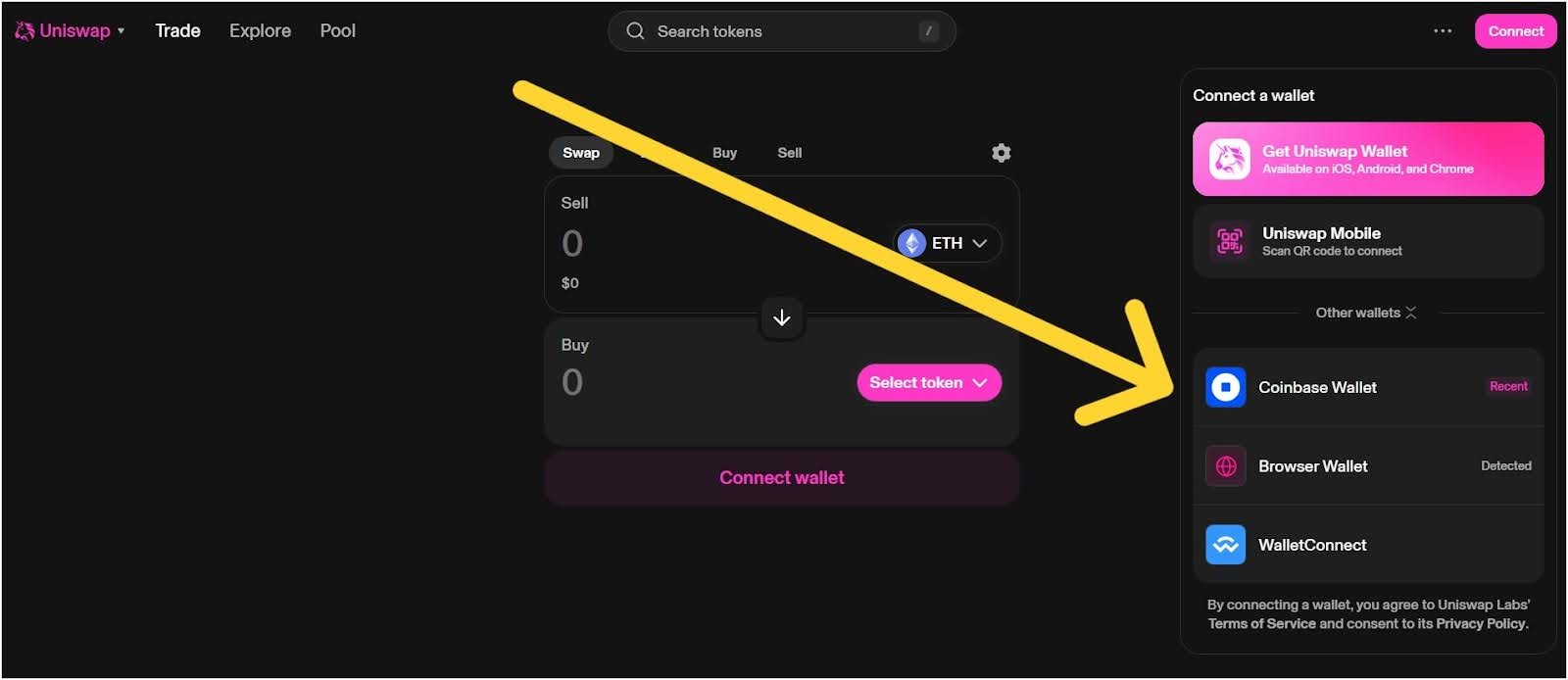
Go to the Uniswap web site (app.uniswap.org). On the location, you’ll see a “Join Pockets” button, which is often within the prime proper nook. Click on that and comply with the prompts to attach your MetaMask or different appropriate pockets. It should hyperlink your pockets to the Uniswap platform.
Step 3: Select Your Liquidity Pool
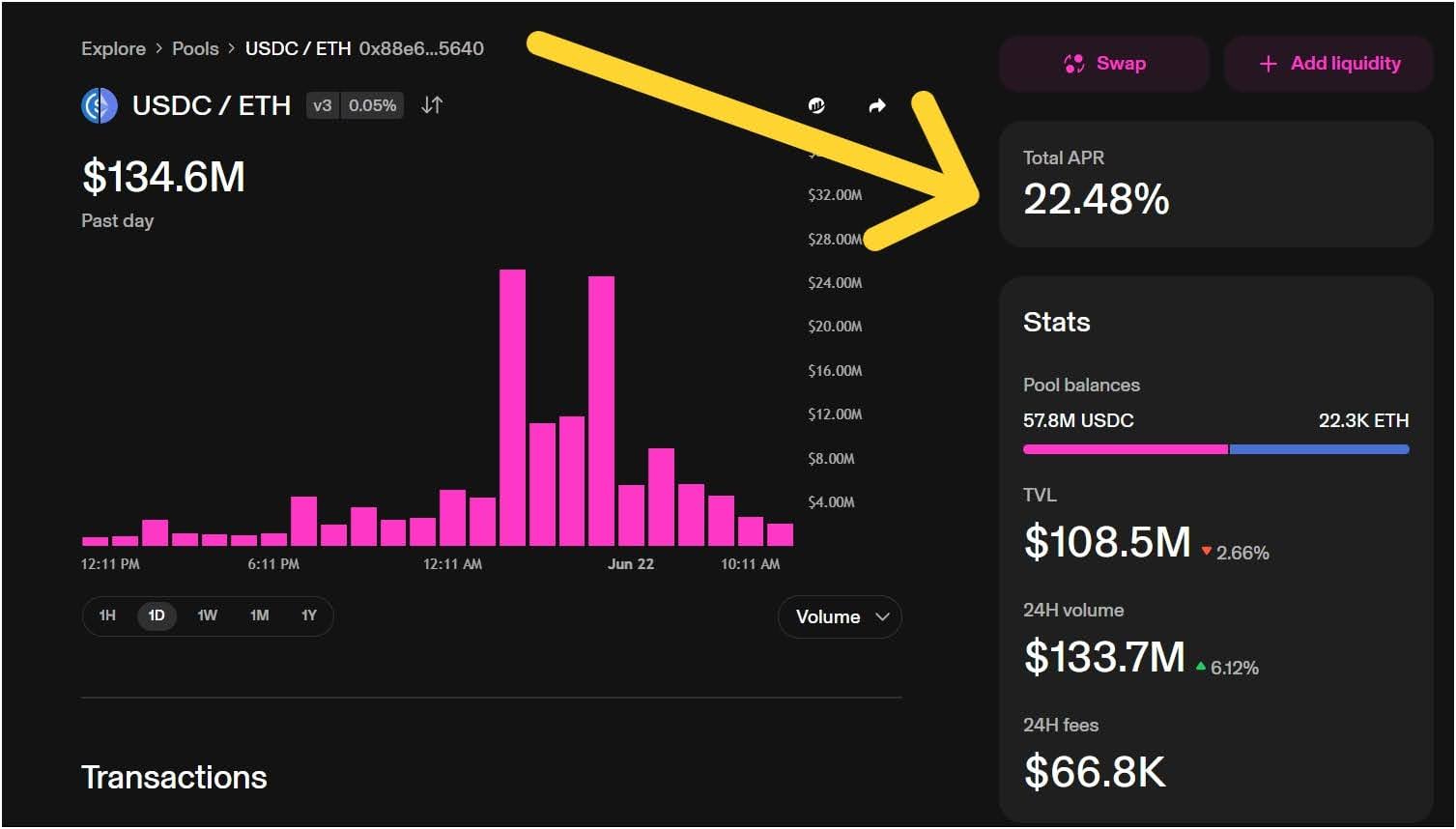
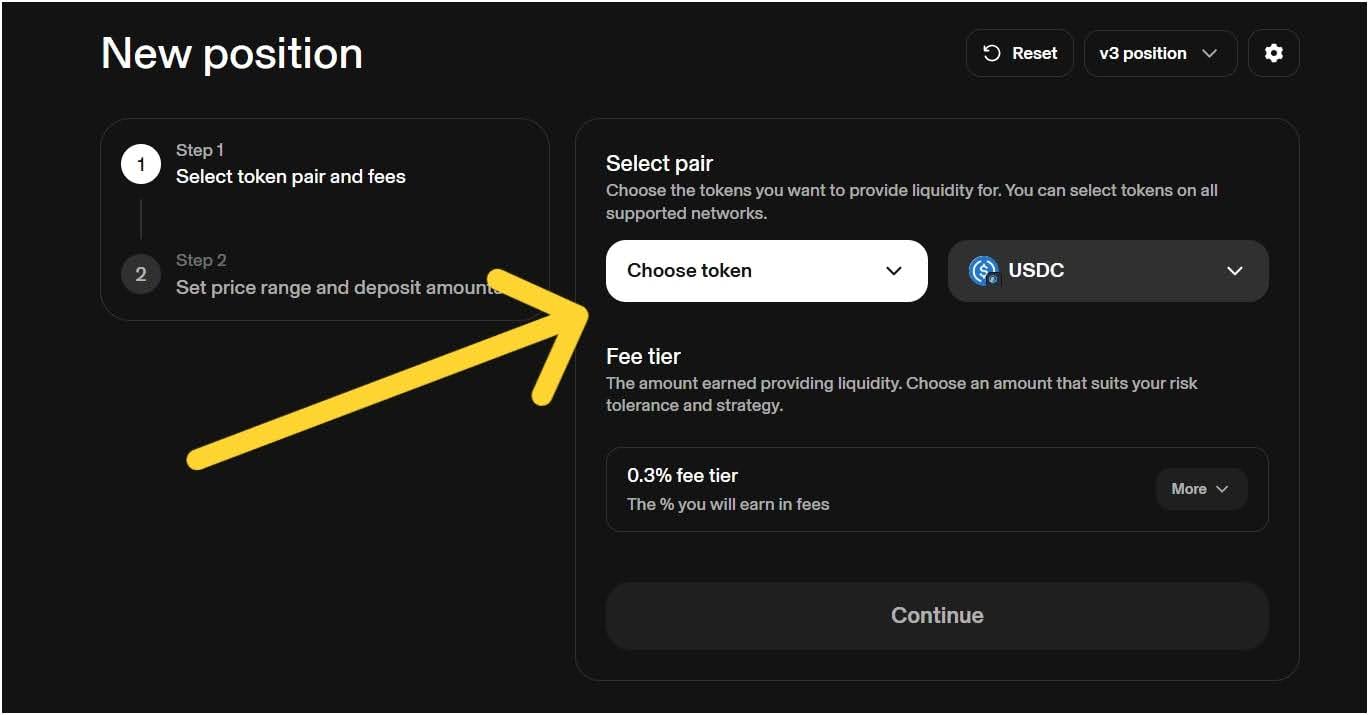
After you have related your pockets, you could navigate to the “Pool” part. You’ll then want to pick out which pair of tokens you wish to present liquidity for. Uniswap affords numerous swimming pools, and also you’ll usually decide one that you just’re snug holding each tokens for. Keep in mind, you’ll want to offer an equal worth for every token.
On Uniswap v3, you additionally get to decide on a price tier and a value vary; this allows you to focus your liquidity, which may earn extra charges but additionally may be very dangerous because it will increase impermanent loss threat if costs transfer out of your chosen vary.
Step 4: Deposit Your Tokens and Get LP Tokens
You’ll must enter the quantity of tokens you wish to deposit. The platform will routinely calculate the corresponding quantity of the opposite token wanted. Now, affirm the transaction in your pockets, and your tokens will probably be added to the liquidity pool.
In return, you’ll obtain “LP tokens” (Liquidity Supplier tokens), which you’ll be able to name a receipt representing your share of that pool. These LP tokens are what you maintain to show your contribution and to later declare your share of the charges and rewards.
How Do Liquidity Suppliers Contribute to Liquidity Mining?
Liquidity suppliers contribute to mining by becoming a member of a pool after which depositing two tokens of equal worth, like ETH and USDC. These tokens assist merchants swap between pairs on decentralized platforms. In return, the supplier earns rewards, often from buying and selling charges and typically bonus tokens. The extra they add, the extra they earn. Principally, with out these suppliers, the platform gained’t have sufficient liquidity for easy trades. It’s also possible to discover our information on exit liquidity to study extra concerning the crypto liquidity half.
Is Liquidity Mining Worthwhile?
Sure, liquidity mining could be worthwhile, however there are numerous related dangers. The profitability will depend on issues just like the buying and selling quantity within the pool, the particular reward tokens supplied, and crucially, how effectively the costs of the deposited belongings maintain up. Excessive buying and selling volumes imply extra charges distributed, and if the motivation tokens acquire worth, that’s a bonus. However threat publicity, like impermanent loss and market volatility, can have an effect on earnings. So sure, it will probably work, however it’s not assured earnings.
Is Liquidity Mining the Similar as Yield Farming?
No, they’re not fairly the identical, although they’re very intently associated. Liquidity mining focuses purely on offering liquidity to a decentralized trade’s swimming pools and incomes rewards for doing so.
Now, yield farming is a a lot wider technique that includes transferring crypto belongings throughout numerous DeFi protocols to seek out the very best returns, which may embrace lending, borrowing, and staking, along with liquidity mining. So, liquidity mining is part of yield farming.
Is Liquidity Mining Legit?
Sure, liquidity mining is legit when achieved on trusted DeFi platforms like Uniswap, Curve, or Aave. It really works by means of sensible contracts and rewards customers who assist the system with liquidity. However scams do exist, particularly from faux or unverified initiatives.