Exit liquidity that means is when somebody buys a token at a excessive worth, permitting earlier holders to promote and exit with revenue. It normally occurs throughout pretend pumps or hype when the worth appears to be like like it is going to preserve rising, nevertheless it’s really a entice for brand spanking new consumers.
Exit liquidity issues in crypto as a result of it causes heavy losses for small traders and lets whales or insiders exit safely. This creates false pleasure, misleads new merchants, and damages belief in legit tasks. Additionally, many occasions, it additionally hides the actual worth of tokens and makes use of social media for pretend promotions.
This information will clarify the exit liquidity definition and customary kinds of exit liquidity traps. We additionally clarify easy methods to determine an exit liquidity entice and how one can keep away from it with some greatest methods.
What Is Exit Liquidity in Crypto?
Exit liquidity refers to how simple it’s for somebody to promote their crypto and obtain their a reimbursement. Let’s say you purchase a brand new meme coin. Now, if many individuals wish to purchase that coin, it’s simple so that you can promote it at an excellent worth. This merely means there’s “good exit liquidity”.
Conversely, if there usually are not sufficient consumers, it turns into troublesome so that you can promote, or you’ll have to promote it at a a lot cheaper price, attributable to worth slippage. Therefore, that is referred to as “low exit liquidity”. In crypto, generally new traders purchase cash at excessive costs, and the individuals who purchased them early promote their cash to all these new consumers. So, the brand new consumers present the “exit liquidity” for the early consumers to depart with revenue, typically leaving the brand new consumers with losses when the worth falls.
Total, if you wish to perceive the exit liquidity that means in crypto, it normally reveals how easily somebody can promote their crypto with out dropping worth.

What Are the Most Frequent Kinds of Exit Liquidity Traps?
The commonest kinds of exit liquidity traps are pump-and-dump schemes, rug pulls, honeypots, and insider token dumps.
Pump‑and‑Dump Schemes
Think about a gaggle of individuals shopping for a big amount of a small, unknown crypto coin at a really low worth. These cash may be thought-about newly launched meme cash. Then, they begin making a whole lot of hype about this coin on social media platforms, similar to Twitter or Telegram, telling everybody it’s the “subsequent large factor.” They could even pay influencers to put it up for sale. This creates a whole lot of pleasure, and lots of new crypto traders, fearing they’ll miss out (a phenomenon often called FOMO – Worry Of Lacking Out), begin shopping for the coin.
As increasingly more folks purchase, the worth of the coin will increase quickly – that is the “pump” half. In lots of instances, this type of rise is a part of an exit liquidity pump, the place early consumers plan to promote on the prime. As soon as the worth may be very excessive, the unique group of people that purchased it cheaply now promote all their cash rapidly. Once they promote, there are immediately many extra sellers than consumers, and the worth crashes down very quickly. That is the “dump” half.
The retail traders who purchased in late are left with cash that are actually price little or no or nothing, whereas the unique group made some huge cash. These schemes typically goal cash that don’t have an actual function or a robust mission behind them.
Rug Pulls
A rug pull is much like a pump-and-dump, however even worse. In a rug pull, the individuals who create a brand new cryptocurrency mission construct some belief, probably with a pleasant web site and large guarantees. They get traders to take a position cash of their new coin. They normally management many of the coin’s provide or the way in which the coin works. As soon as they’ve collected sufficient cash from traders, they immediately halt the mission and make a worthwhile exit. They take all the cash from the mission’s funds (like from a “liquidity pool” the place cash are traded) and disappear.
This leaves the traders with nugatory cash and inflated costs as a result of there’s no exit liquidity backing the coin anymore, and nobody to commerce it with. Generally, they even put hidden code within the coin’s sensible contract that stops you from promoting your cash, whereas they will promote theirs. There’s no actual mission, only a trick to get your cash.
Honeypots
A honeypot in cryptocurrency is a tough sensible contract that appears like an excellent funding alternative, nevertheless it’s designed to entice your cash. Let’s say you discover a new meme coin on Solana that appears promising, and you may simply purchase it on Raydium or Jupiter. The worth would possibly even go up for a bit, making you assume it’s actually an excellent funding.
Nonetheless, the sensible contract (the code that makes the coin work) is secretly written in order that solely the one that created it could possibly promote the coin. You should buy it, however whenever you attempt to promote it, you may’t. Or, there may be large charges or promoting tax that make promoting unimaginable, or it helps you to promote solely a really small quantity. So, your cash will get caught within the contract, like honey in a pot, and solely the scammer can withdraw it.
Pre-Sale and Insider Token Dumps
When a brand new cryptocurrency mission is about to launch, generally it affords “pre-sales” or “non-public gross sales” the place sure folks, just like the mission creators, early traders, or large companions (typically referred to as “insiders” or “whales” if they’ve a whole lot of cryptocurrency), can purchase the tokens at a really, very low worth earlier than anybody else. Primarily, they get an enormous quantity of those tokens’ provide for affordable.
When the mission then launches to the general public market traders, and the tokens begin buying and selling on crypto exchanges, there’s typically a whole lot of pleasure and hype. Many common merchants or unsuspecting traders, who didn’t get into the pre-sale, rush to purchase these tokens.
As the worth goes up due to this new demand, the insiders who purchased on the super-low worth now promote their tokens. They dump their massive holdings onto the market, making an enormous revenue. This sudden promoting by many large holders causes the worth to crash, and the common individuals who purchase on the increased public worth are left holding tokens which have misplaced most of their worth. The insiders used the general public’s pleasure as their “exit liquidity” to money out.
How Does Exit Liquidity Work in Different Markets?
In different markets, just like the inventory market or foreign exchange, exit liquidity normally means there are sufficient consumers when somebody needs to promote. So, in case you personal shares of an enormous firm like Apple or Tesla, many merchants are at all times buying and selling these shares. This implies you may normally promote your shares rapidly with out inflicting the worth to drop loads. The market has a whole lot of “pure liquidity” as a result of many individuals are at all times shopping for and promoting for various causes. Additionally, there are large corporations referred to as “market makers” that assist preserve promoting easy by at all times being prepared to purchase.
So, the principle distinction is that in conventional markets, exit liquidity is usually about wholesome market operate and ease of commerce. In crypto, particularly with smaller or newer cash, it could possibly typically imply you might be shopping for one thing that another person is attempting to dump.
What Are Some Fashionable Examples of Exit Liquidity?
The 2 hottest examples of exit liquidity are the Terra LUNA crash in 2022 and the Squid Recreation Token rug pull in 2021.
Instance 1: The Terra (LUNA) Crash in 2022
Terra had a stablecoin referred to as UST that was presupposed to at all times keep at $1. To maintain this $1 peg, it used one other coin, LUNA. If UST went beneath $1, you might swap it for LUNA and burn the UST, which might make UST return up. If UST went above $1, you might do the other.
However then, one thing large occurred. There was a really great amount of UST offered on a decentralized trade, which precipitated UST to “de-peg” from the greenback, that means it went beneath $1. This made many individuals panic. They rushed to promote their UST, which meant burning UST and minting an enormous quantity of LUNA. Therefore, this made the availability of LUNA explode, and its worth began to fall very, very quick. As LUNA fell, much more folks needed to promote their UST, which created much more LUNA, making the worth drop even sooner.
Now, this created a “demise spiral”; many early traders and large holders who realized what was taking place tried to promote their LUNA and UST as rapidly as doable. The individuals who saved shopping for LUNA and UST grew to become the exit liquidity for many who managed to get out earlier than the whole collapse.
Instance 2: Squid Recreation Token Rug Pull
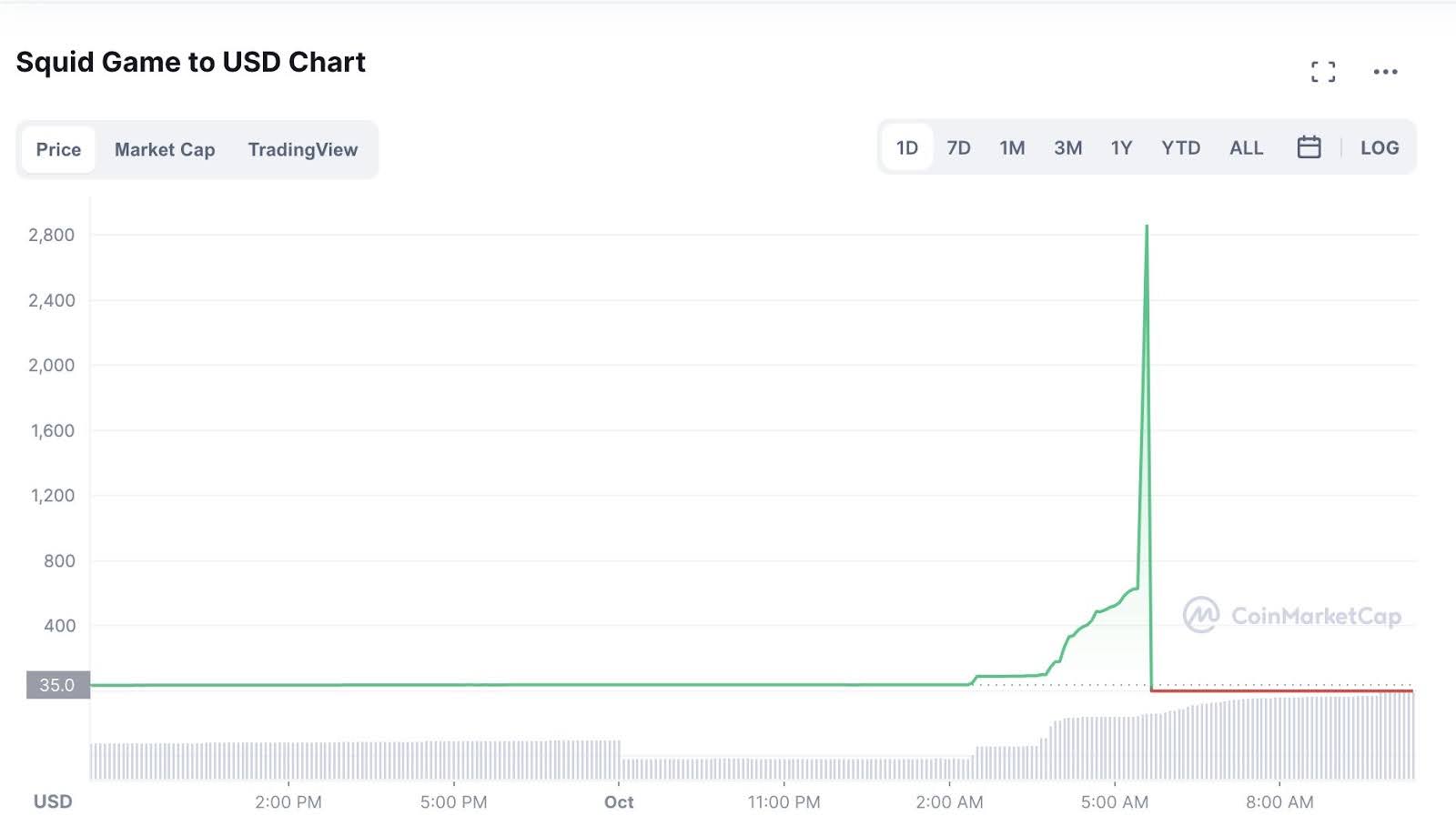
In 2021, a mission referred to as Squid Recreation Token emerged. This token used the TV present’s title with out permission, and it skyrocketed from pennies to about $2,861 per token. Then, holders discovered they might not promote. The builders disabled the promoting characteristic. Quickly after, about $3.3 million was pulled out. Therefore, the Token worth crashed to almost zero. This was a traditional rug pull exit rip-off.

Easy methods to Determine an Exit Liquidity Lure
To determine an exit liquidity entice, it is advisable to test for sudden worth pumps with out motive, low buying and selling quantity earlier than the pump, shilling and promotions on social media, locked or centralized liquidity, massive wallets holding many of the provide, and locked feedback or hidden info.
Sudden Value Pump With out Cause
This is likely one of the most evident purple flags. Let’s say a coin’s worth immediately shoots up by 50%, 100%, or much more, in only a few hours or days. However whenever you search for why that is taking place, there’s no actual information. No large partnerships, no new expertise launched, no main mission milestones. It’s simply… rising.
This type of sudden leap with no clear, elementary motive typically signifies that a gaggle of individuals is deliberately shopping for up the coin to inflate its worth. Principally, they’re attempting to create synthetic pleasure so new consumers leap in and so they turn out to be “exit liquidity”.
Low Buying and selling Quantity Earlier than the Pump
Earlier than a suspicious worth pump begins, check out the coin’s buying and selling quantity. If it was very low, nearly “lifeless,” that means not many individuals have been shopping for or promoting it, after which immediately, quantity explodes alongside the worth pump, that’s a robust indicator of manipulation. In a wholesome market, quantity normally will increase step by step as curiosity builds.
Shilling and Promotions on Social Media
“Shilling” means selling one thing very aggressively and infrequently misleadingly, normally on social media platforms like Twitter, Telegram, or Discord. In the event you begin seeing many accounts, particularly new ones or these with numerous followers however little real engagement, always speaking a couple of coin and urging everybody to purchase it “earlier than it’s too late,” be very cautious. These promotions typically use language like “o the moon!” or “large good points incoming!” with none actual technical or elementary evaluation to again it up.
Locked or Centralized Liquidity
Liquidity is the benefit with which a coin may be purchased or offered. In DeFi, most tasks create “liquidity swimming pools” the place people provide pairs of tokens (similar to ETH and a few new coin) to permit buying and selling. If a mission says its liquidity is “locked,” it means tokens in these swimming pools can’t be withdrawn by creators for a while, which is successfully a optimistic signal.
But when the liquidity is just not locked, or a really excessive proportion of the availability of a coin is held by one tackle or a number of addresses, then they will withdraw the liquidity at any time when they need. This act, often called a “rug pull,” leaves all different holders unable to promote their cash, as there’s no marketplace for them.
Giant Wallets Holding Many of the Provide
This criterion primarily focuses on the distribution of the coin initially. In the event you take a look at the coin’s blockchain explorer (a public file of transactions), you may typically see which addresses maintain probably the most cash. In the event you discover {that a} very small variety of addresses maintain an enormous proportion (say, over 50% or 70%) of the whole coin provide, this can be a main purple flag.
Locked Feedback or Hidden Data
Transparency is vital in crypto. If a mission’s communication channels (like Telegram teams, Discord servers, or Twitter feeds) have feedback locked, or if questions are always deleted and important suggestions is suppressed, it’s an enormous warning signal.
Easy methods to Keep away from Exit Liquidity?
To keep away from exit liquidity traps, you will need to analysis the mission deeply, test for wholesome buying and selling quantity and locked liquidity, steer clear of hype-driven promotions, evaluate token distribution to keep away from whale management, confirm sensible contract and pockets exercise utilizing blockchain explorers, and keep away from tokens created by nameless or unverified groups.
Analysis the Challenge Correctly: Earlier than placing any cash, test the web site, learn the whitepaper, and see if the group is actual. In the event you can’t discover clear particulars or if the whole lot appears to be like copied or pretend, don’t belief the mission.Examine Buying and selling Quantity and Liquidity: Have a look at how a lot buying and selling occurs each day and the way a lot cash is within the liquidity pool. If quantity is just too low or liquidity is just not locked, you won’t have the ability to promote later.Keep away from Hype and Paid Promotions: If the token is being promoted by random influencers or teams with none actual updates or product, it’s seemingly a entice for you. It is because actual tasks develop slowly with actual information, not simply hype.Have a look at Token Distribution: Go to the blockchain explorer and test what number of wallets maintain the token. Now, if only a few wallets management most of it, bear in mind, they will dump it on you anytime and depart you caught.Use Blockchain Instruments to Confirm Data: It’s essential to use instruments like Etherscan, Solscan, or BscScan to test the contract, holders, and developer pockets actions. And, in case you see unusual exercise, it’s best to undoubtedly keep away.Don’t Belief Nameless Groups: All the time attempt to discover out who’s behind the cryptocurrency mission. Are the builders and leaders identified? Have they got an excellent fame within the crypto house? If the group is totally nameless or if they’ve a historical past of failed or suspicious tasks, it’s an enormous warning signal.
Additionally, don’t fall sufferer to FOMO. FOMO, or “Worry Of Lacking Out,” has the potential to guide you into some unhealthy investments. When a coin’s worth is skyrocketing and everybody’s discussing it, you could really feel that it’s best to make investments instantly. This usually tends to trigger folks to take a position on the peak, simply in time for the worth to drop. So, we suggest that you just at all times take time, do your analysis, and keep away from permitting pleasure to immediate you into unhealthy investments.
What Are the Finest Methods for Managing Exit Liquidity in Crypto Buying and selling?
The perfect methods for managing exit liquidity in cryptocurrency buying and selling are to set clear revenue targets and follow them, use dollar-cost averaging, implement a partial exit technique, monitor key market indicators, and diversify your portfolio.
Set Clear Revenue Targets and Persist with Them: Earlier than you even purchase a coin, you will need to resolve at what worth you’ll promote to take your earnings. This usually stops you from getting grasping and holding on too lengthy, which may result in dropping all of your good points if the worth immediately drops.Use Greenback-Value Averaging Out (DCA Out): As an alternative of promoting all of your crypto without delay, particularly in risky markets, you can begin promoting small parts over time, at some common intervals. Therefore, this fashion, you common your promoting worth and cut back the danger of promoting the whole lot on the lowest level.Implement a Partial Exit Technique: This primarily means you can begin promoting a portion of your funding to safe some revenue, whereas nonetheless conserving a smaller quantity in case the worth continues to rise unexpectedly.Monitor Key Market Indicators: Look ahead to market alerts which may recommend a shift in development and worth actions. These can embrace a sudden drop in buying and selling quantity, a change in market sentiment (when everybody begins turning into too excited or too scared), or perhaps a coin failing to interrupt via a sure worth help stage.Diversify Your Portfolio: You shouldn’t put all of your cash into only one or two cryptocurrencies. Attempt to put money into totally different cash to diversify your portfolio. So, if one mission fails or turns into an illiquid asset, you don’t lose your whole funding.
What Does Taking Out Liquidity Imply?
Taking out liquidity means somebody, normally an enormous market maker, is withdrawing a considerable amount of crypto or funds from a buying and selling pool or market. This principally occurs when a whole lot of cash are offered, and there aren’t sufficient consumers to soak up them simply. When somebody “takes out” liquidity, they’re basically eradicating the out there funds that permit others to purchase and promote simply.
What Does It Imply to Run Out of Liquidity?
To expire of liquidity means there are now not sufficient funds or consumers in a market to deal with promoting requests with out inflicting an enormous worth crash. In crypto, if a coin runs out of liquidity, it means there’s nobody keen to purchase it at an affordable worth, or the whole amount of cash in the stores it is vitally low. Therefore, this makes it almost unimaginable for holders to promote their cash with out taking huge losses. And successfully trapping them with belongings they will’t convert to money.
What Are the Finest Instruments for Detecting Suspicious Habits in Crypto?
The perfect instruments for detecting suspicious habits in crypto are blockchain explorers, bubblemaps, and blockchain analytics instruments like Nansen. Blockchain explorers like Etherscan enable you test pockets exercise, token distribution, and sensible contract particulars. Bubble Maps present visible hyperlinks between wallets, serving to you see related wallets attempting to pretend exercise. And the misplaced one, Nansen tracks sensible cash flows, whale actions, and weird token habits utilizing real-time knowledge. For more information, you may learn our detailed Nansen evaluate.
Easy methods to Shield Your self From Changing into Exit Liquidity?
To guard your self from turning into an exit liquidity, it is advisable to be sensible and do your homework earlier than investing. First, at all times analysis the mission itself; does it have an actual use and a stable group? Second, keep away from cash which have sudden worth surges, as these are sometimes “pump and dump” schemes.
Third, it’s best to by no means make investments greater than you may afford to lose. Fourth, you may attempt to set clear revenue targets and follow them, so that you don’t get grasping and miss your probability to promote. Lastly, ensure to diversify your investments throughout totally different cash, so if one mission fails, you don’t lose the whole lot.